




From the daily commute to the trail.
What happens when the technology found in high-performance running shoes is transferred to a bicycle saddle?
SQlab saddles with BASF Infinergy® replace conventional PU padding with a reactive E-TPU particle foam — an innovative material that absorbs impacts, rebounds in an instant, and maintains its performance over countless rides. The result is a new level of comfort, reduced vibration, and a responsive riding experience on every terrain.

What is BASF Infinergy®?
Not your typical saddle foam.
BASF Infinergy® is expanded thermoplastic polyurethane (E-TPU), developed by BASF and built from fused elastic particles. You may know it from running shoes; in an SQlab saddle it takes the place of classic PU foam.
Unlike traditional padding that compresses and gradually loses support, BASF Infinergy® absorbs impact dynamically and instantly returns to its original shape. The result is responsive cushioning without a soft, sinking feel, and consistent support ride after ride.
The entire padding is made from E-TPU. Instead of a full cover, abrasion-resistant, adhesive-free tapes protect only the high-wear areas, giving the saddle its distinctive look.
Why BASF Infinergy® is Different
Every hit, handled.
Conventional PU foam works by compressing — it gives way, and under a rapid series of impacts it's still compressed when the next one arrives. BASF Infinergy® takes the load dynamically and springs back immediately, so support stays defined hit after hit. It damps without ever feeling spongy.
Three things that follow from that:
Fewer harsh load peaks: it absorbs the vibration and impact from curbs, cobbles and roots before they reach you.
Support that lasts: it keeps its rebound and its shape under repeated load, instead of packing down over a season.
Tough enough to show itself: high abrasion resistance replaces the full cover with targeted tapes, and the particle surface makes the technology visible.
And the part the material can't do alone: relief comes from the complete system — sit bone width, step shape and Active Technology. The right width puts your weight on bone instead of soft tissue; upright trekking riders generally size up. The foam takes the ground out of the ride. The fit decides how the rest of it feels.

BASF Infinergy® Foam – This Is The Difference
| Conventional Saddle Foam | BASF Infinergy® |
|---|---|
| Primarily absorbs through compression | Maintains comfort while staying supportive |
| Can feel soft or passive under load | Responsive under dynamic load & rough terrain |
| Recovery depends on foam structure | High rebound keeps support consistent |
| Covered by a full saddle cover | Technology you can see and feel |
| Often focused on cushioning for comfort | Focused on damping and controlled support |
| Softness can lead to sit bones can sink in deeply | Soft feel with stable sit bone support |

Step Saddle Shape
Pressure belongs onto sit bones. Not on soft tissue.
Even pressure distribution is the goal. But it only helps when it happens on the right structures. A perfectly flat saddle distributes load across the whole contact area, sensitive soft tissue included and that's where numbness comes from.
The sit bones are the structures your body is built to carry weight on. So the job isn't to spread the load wider, it's to concentrate it there and then distribute it evenly across them. That's what the SQlab Step Saddle Concept is engineered for: it lifts the load off the delicate areas and balances it over the bone.

active Technology
Your pelvis moves when you pedal. Your saddle should move with it.
Every pedal stroke tilts your pelvis side to side. A rigid saddle works against that movement and the load ends up in your lower back.
SQlab's active Technology lets the saddle flex laterally and follow the motion instead. That takes strain off the lower spine, pelvis and hips, relieves the discs and facet joints, and eases the load on the sit bones. The result: more comfort on long rides, and a saddle that works with your body rather than bracing against it.
Saddle Width System
Saddle width isn't a preference. It's a measurement.
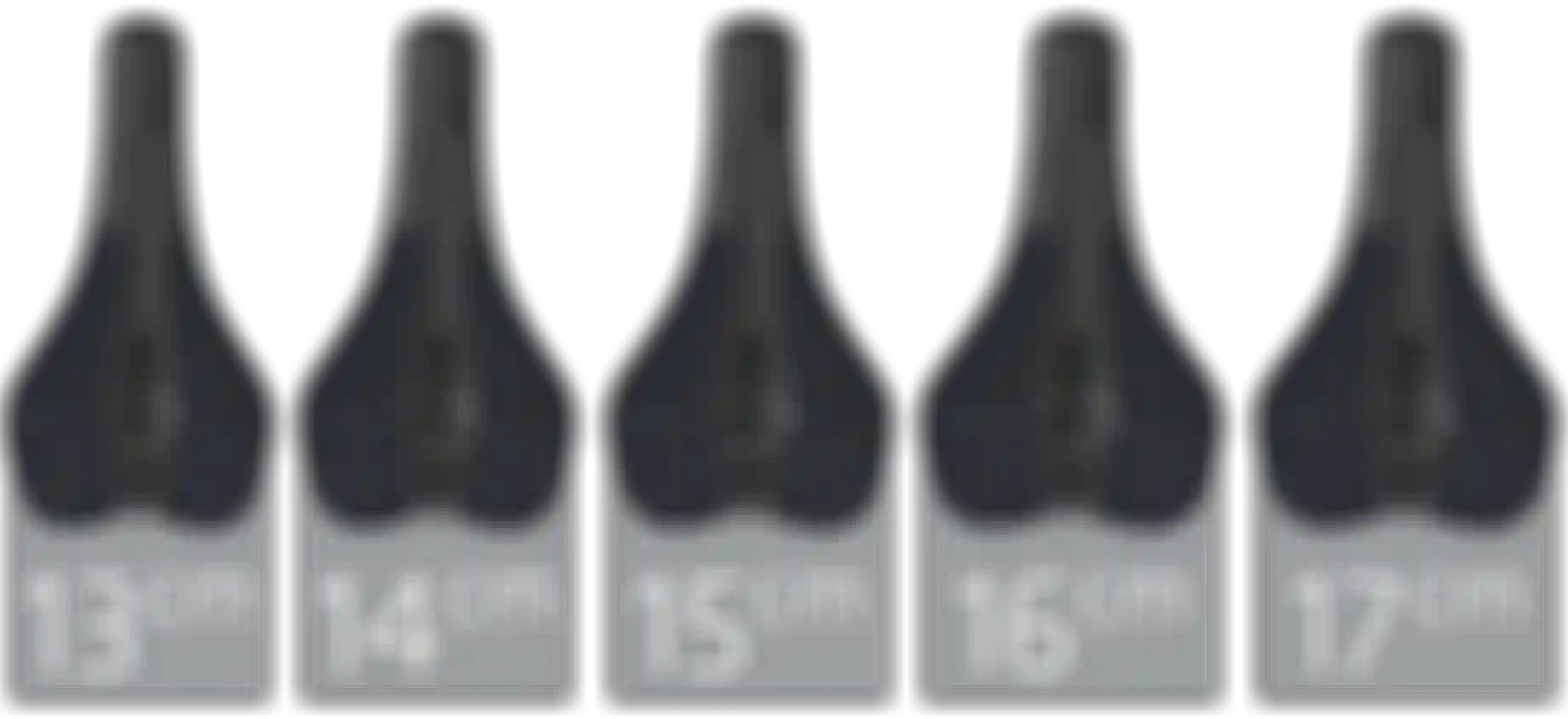
Sit bone spacing differs from rider to rider and it decides whether your weight lands on bone or on soft tissue. SQlab built the first standardized saddle width system to turn that anatomical difference into a measurable value, and that value into a saddle that actually fits.
Measure, don't guess: the material handles the impacts, but no foam compensates for the wrong width.
Made in Germany
Built bare. Built to last.
SQlab BASF Infinergy® saddles are made in Germany on a production technology developed together with Oechsler.
No full cover. Instead, the high-wear zones are reinforced with tough protective tapes bonded directly to the BASF Infinergy® material without adhesives.
This unique construction:
Reduces unnecessary material
Highlights the technology
More durability where it counts
Creates the characteristic BASF Infinergy® look
Frequently Asked Questions
Not necessarily.
BASF Infinergy® is designed to feel reactive, supportive and damping rather than extremely soft.
The material is engineered for long-term shape retention and recovery performance.
The unique construction allows SQlab to reduce unnecessary cover material and showcase the technology directly.
No.
Correct saddle width, riding position and saddle setup remain essential for comfort and pressure relief.
Not on its own. The material handles impacts; relief comes from the complete system of shape, width and active Technology. The wrong saddle width or a bad setup can't be compensated by any foam. Measurement, riding position, saddle tilt and a test ride matter.
Via sit bone measurement. Your riding position counts too: the more upright you sit, the wider you need. For the 610 in a trekking position, generally take one size wider than measured.
Often yes, briefly. The step shape and the defined riding position feel unfamiliar to some riders at first. That's an adaptation phase for your body, the foam itself does not need breaking in.
Still need advice? Ask us directly for personal support
If you still aren't sure about how to find your perfect matching products, don't hesitate to call our customer support or to write us through the contact form. You can also have a look at our FAQ or visit a specialist retailer near to your location.